Couch to 5K
Go from the couch to a 5K. Without getting hurt.
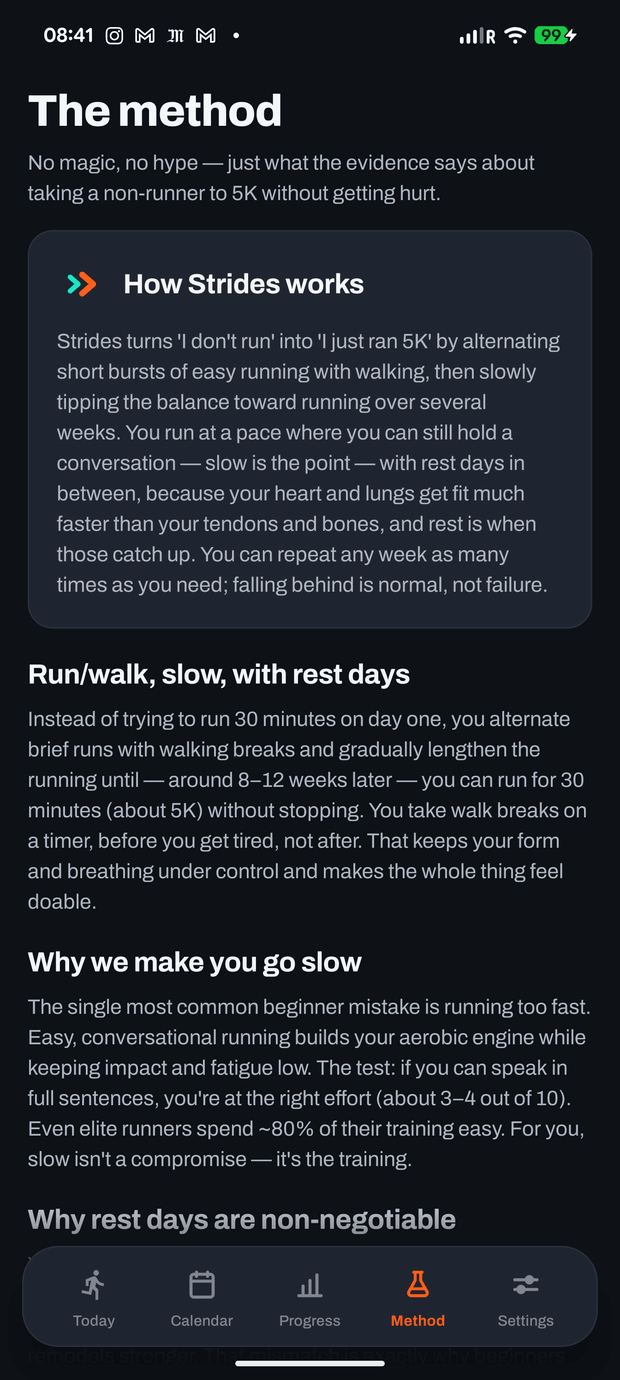
Most people who try to start running quit within a few weeks — usually after doing too much, too soon, and ending up sore, deflated, or hurt. Strides gives you a plan that starts easier than you think you need, and speeds up only as fast as your body can take. You run when it says run.
Private & on-device · free & open source · coming to Android
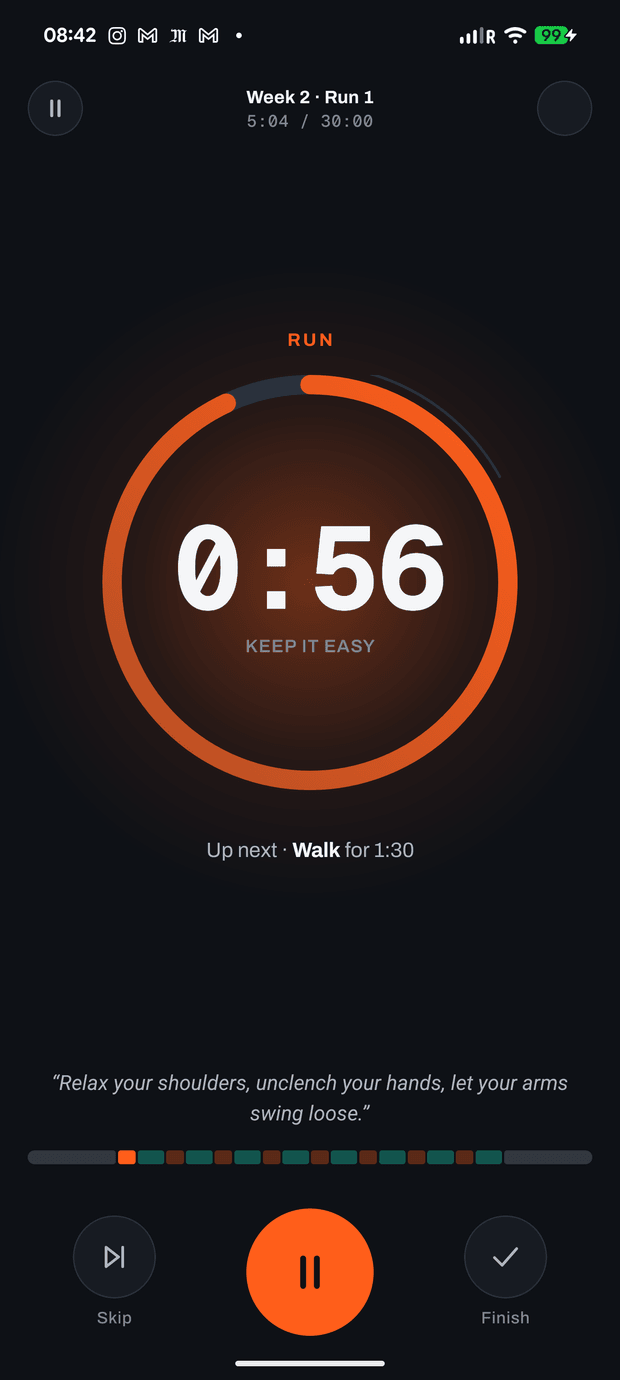
Run a little, walk a little, slowly tip the balance.
You don't begin by running thirty minutes. You jog a minute, walk ninety seconds, and repeat — then over a couple of months the running quietly takes over. It's the method behind the NHS's Couch to 5K, and it works because of three things most plans get wrong.
Slow is the point
Beginners almost always run too fast, then wonder why it hurts. Easy, can-still-talk running is what actually builds fitness — even elite runners spend most of their time this slow.
Seiler, polarized-training research
Rest is where you improve
Your heart and lungs get fit in weeks. Tendons and bones take months — and they're what give out when you push too hard, too early. Strides paces you to the slow part.
Warden et al., Curr Osteoporos Rep 2021
Falling behind is allowed
Off day, busy week, a run that just didn't happen? Repeat it — no broken streak, no guilt trip. People quit rigid plans and finish forgiving ones.
IJERPH 2023, 20(17):6682
A plan made for your body — not a generic chart.
Tell it your goal, how long you've got, and which days you can run. It shapes the whole run/walk progression around that — and if your timeline would mean ramping up dangerously fast, it tells you, and offers one your body can actually handle.
- Pick your run days — and drag a session to another day when life gets in the way.
- Easier weeks built in, so the effort never climbs too quickly.
- No single run leaps far past your last — the number-one cause of injury.
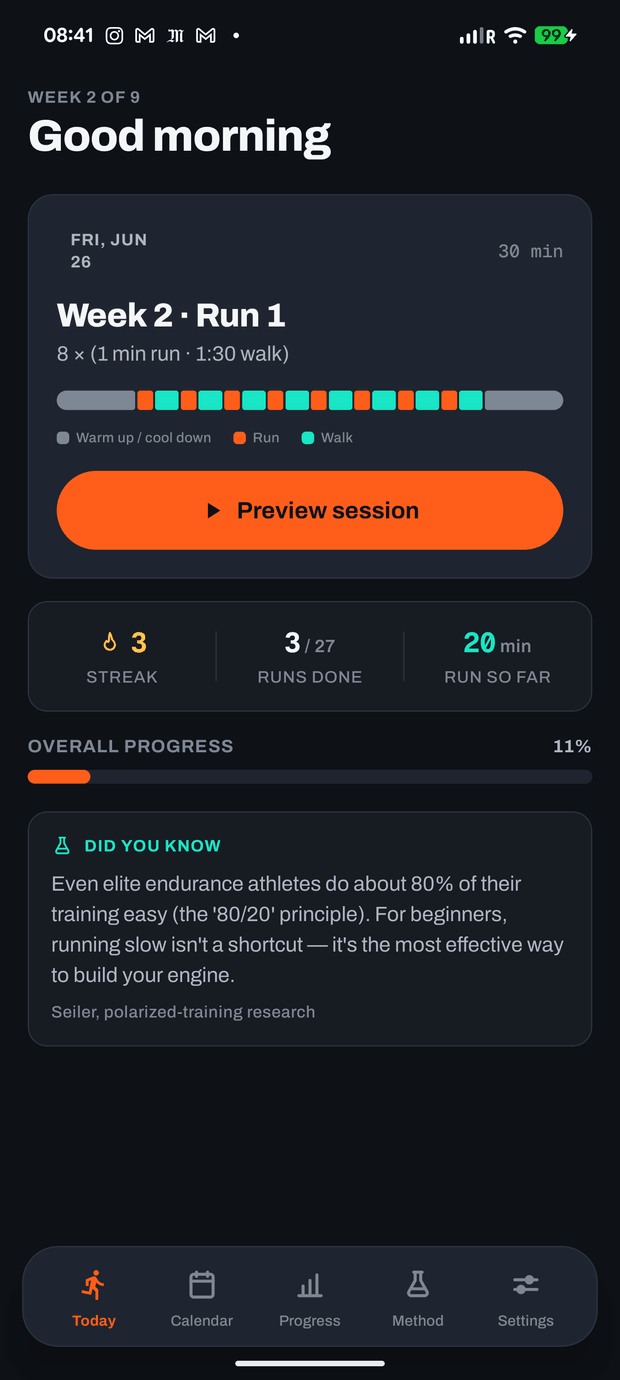
On a run, there's nothing to figure out.
A ring counts down and tells you when to run and when to drop back to a walk. You're not watching your pace, counting intervals, or deciding when to push — which is exactly how a beginner avoids doing too much. Press start and follow it.
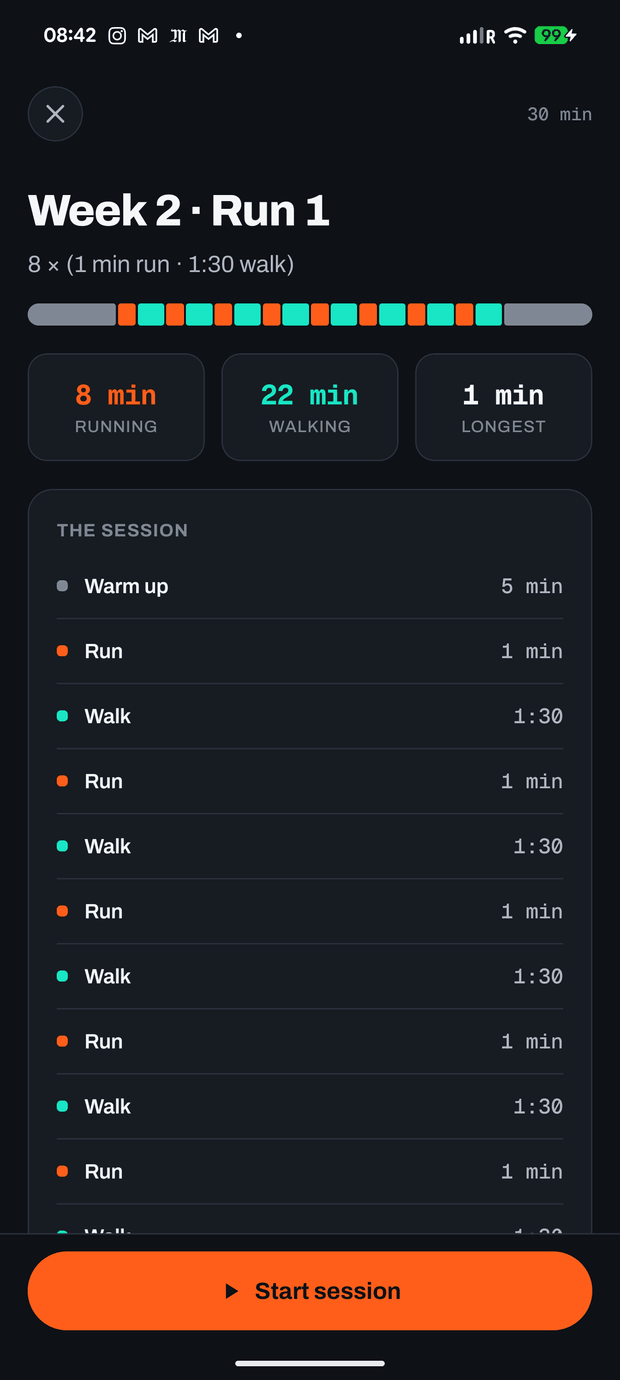
The part that gets you out the door.
Every run you finish fills in the calendar and nudges the bar a little higher. On the weeks you'd rather not bother, that small, visible run of green is often the thing that makes you go anyway.
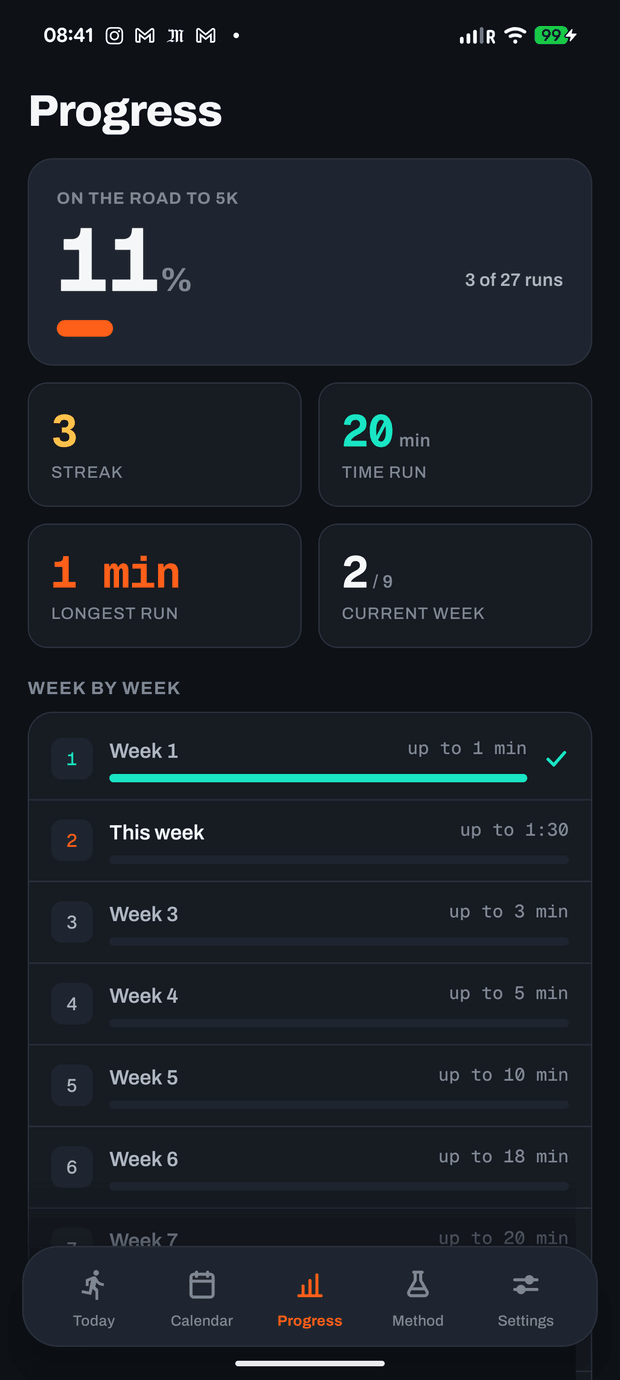
It shows its work.
Strides doesn't just tell you to trust it. A Method screen lays out why the plan looks the way it does, with the actual studies behind each claim — including a few well-worn "rules" that turn out to be myths. No secret sauce, no hand-waving.
It's just you and the run.
No account, no sign-up, no analytics — nothing leaves your phone. Strides works completely offline, and the only person who ever sees your runs is you.
Start from wherever you actually are.
Free and open source. Coming to Android.